top of page
Search


A Vision in Motion: Leadership, Legacy, and the Rise of Qatar Polo Club

In the world of polo—where precision meets power, and heritage meets modern ambition—few stories are as compelling as that of Fuad, the driving force behind the evolution of Qatar Polo Club. Blending discipline, vision, and a profound connection with horses, his journey reflects not only the making of a sporting institution, but the shaping of a cultural destination.


1-      Leadership in elite environments requires more than management. How would you define your leadership philosophy, and how has it evolved through your journey at Qatar Polo Club?

Leadership, to me, is not defined by authority, but by example. It is a philosophy shaped not in boardrooms, but through experience—particularly as a horseman. Horses, when moving as a group, follow only a leader they trust. That principle translates seamlessly into human dynamics.

Throughout my journey, I have come to believe that people follow not only vision, but conviction—the ability to carry that vision with clarity and purpose. In polo, leadership becomes even more demanding. It is not simply about direction; it is about creating a complete ecosystem—an A-to-Z model of teamwork, discipline, and shared ambition. Without that, success is simply not sustainable.


2-      Horses are not just athletes—they are partners. How would you describe your personal relationship with them beyond the professional sphere?

Horses are extraordinary beings. They possess a rare sensitivity to human emotion—something that cannot be taught, only experienced. At the heart of this relationship are two essential elements: trust and respect.

Without them, there is no connection. But when both are present—when you trust the horse and it trusts you in return—you unlock a partnership that transcends sport. It becomes intuitive, almost unspoken. In many ways, horses have been some of my greatest teachers, particularly in understanding leadership and emotional awareness.


3-      Do you remember the moment you first connected with a horse? Where did this passion begin?

Interestingly, my journey with horses began relatively late. In my early years, I was a professional swimmer. It wasn’t until my thirties that I discovered equestrian sport.

What began as simple riding lessons quickly turned into a deep fascination. The more I learned, the more I realized how vast this world truly is—an intersection of history, science, sport, and even ancient warfare traditions. This curiosity led me to horseback archery, a discipline I pursued passionately and worked to promote across the Middle East. Today, seeing it recognized as a sport in several countries is something I take great pride in.


4-      Polo is often called the sport of kings. What does it represent to you?

Polo earns that title for many reasons. It is not merely about prestige—it is about the level of discipline and coordination required. The sport demands excellence across multiple dimensions: physical readiness, mental sharpness, strategic thinking, and the seamless integration of horse and rider.

What sets polo apart is that it is fundamentally a team sport—yet one that involves both human and equine athletes. Communication, timing, and trust must align perfectly, often under intense physical pressure. In many ways, polo reflects life itself: success depends on preparation, teamwork, and the ability to perform at the right moment.


5-      Looking back, what defining moments stand out in your journey with Qatar Polo Club?

The establishment of Qatar Polo Club under an Amiri decree reflects the significance of this project at a national level. Being entrusted with the responsibility to build the first Qatari polo team has been one of the greatest honors of my career.

One of the most defining moments was preparing our team for their debut at Polo Al Marsa. To bring together Qatari riders—many transitioning from other equestrian disciplines—and prepare them for competitive polo in less than a year was a remarkable achievement. It required an extraordinary collective effort from our team, consultants, and partners.


6-      What were the most significant obstacles you faced in building the club?

Our biggest challenge was the absence of infrastructure. Without dedicated facilities or a stable pool of horses, development becomes significantly more complex. Players relied on rental horses, and much of our progress depended on external training camps.

However, these challenges forced us to adapt, to think creatively, and to build resilience within the team. In many ways, they have strengthened the foundation of what we are building today.


7-      How do you build and maintain a high-performance team culture?

Entering the polo world required us to approach it with humility and openness to learning. We partnered with international experts, including United Polo Consulting, whose guidance has been instrumental in shaping our technical and strategic direction.

At the same time, we collaborated with specialized event teams to bring our vision to life—most notably through Polo Al Marsa, which has quickly established itself as a signature event. While we continue to build internal capabilities, these partnerships have allowed us to accelerate our growth with confidence and precision.


8-      How has Qatar Polo Club adapted to evolving market expectations?

As a relatively young institution, we are still in the early stages of positioning ourselves within the global polo landscape. However, Qatar’s proven expertise in hosting world-class sporting events gives us a strong advantage.

Our focus is to grow thoughtfully—balancing innovation with authenticity—ensuring that while we evolve, we remain true to the spirit and heritage of polo.


9-      How do you balance international ambition with local identity?

We see polo as a powerful platform for cultural exchange and sports diplomacy. Our ambition extends beyond the Middle East—we aim to establish a presence across Asia as well.

At the same time, our identity remains deeply rooted in Qatar’s heritage. The goal is not simply to compete internationally, but to position Qatar as a destination where sport, culture, and hospitality converge.


10-   What is your long-term vision for Qatar Polo Club?

The future is both exciting and ambitious. Our immediate priority is the completion of our dedicated polo facility, which will serve as the foundation for sustained growth.

Beyond that, we aim to establish a local league, develop structured tournaments, and invest heavily in talent development. This includes launching a dedicated polo academy and expanding our talent identification programs.

Equally important is our commitment to inclusivity—particularly in supporting female polo players and fostering a diverse and dynamic community around the sport.

Ultimately, Qatar Polo Club is not just about polo. It is about creating a legacy—a destination where sport, lifestyle, and culture come together in a truly unique way.


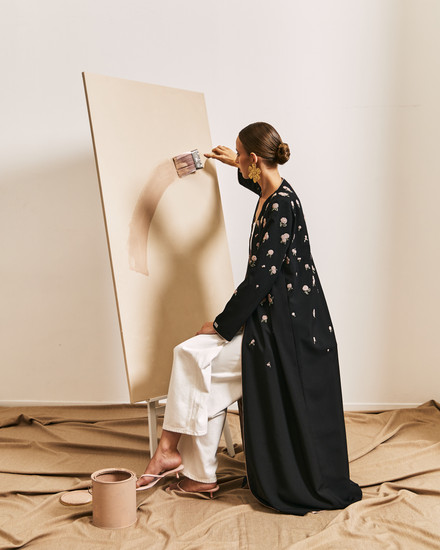
Each day we dress beautifully, we honor the small achievements, the unseen efforts, and the strength it takes to keep going. Wearing something crafted with care becomes a form of self-recognition—a reminder that we are worthy of beauty, even in the simplest moments.


For me, luxury is not an event. It is a way of living—chosen daily, worn effortlessly, and felt deeply.


DUNES: Every brand begins as a story. How did Buthaina first take shape, and what moments along the journey quietly transformed it into what it is today?

BUTHAINA: Buthaina began with something that has always been part of me—a natural eye for fashion and a deep obsession with style, detail, and beauty. Fashion was never a phase; it was a language I instinctively understood.


But the real beginning came from a quieter, more personal place. I wanted to prove something to myself. I wanted to know that I could do more—that I could be more than one role. More than a wife, more than a mother, more than a working woman following a routine. I wanted to create something that was mine.


Starting Buthaina was my way of honoring that belief: that there are no limits to what a woman can do when she follows her passion. Even as a working mother, even while carrying many responsibilities, I knew I was capable of building, creating, and dreaming beyond expectations.


The journey transformed me as much as it shaped the brand. It became a reminder that women do not need to choose between who they are and what they want to become. We can be everything—and still create something extraordinary


DUNES: You often speak of luxury not as an event, but as a way of living. What does it mean to you to design handmade abayas that honor the beauty of everyday life?

BUTHAINA: I’ve always believed that every day is an occasion. Every morning we wake up is an event in itself.

Why should beauty be reserved for special dates on a calendar? Why should hand embroidery be saved only for ceremonies and celebrations?


To me, what we wear should reflect who we are—every single day. Fine fabrics, steady design, and the natural flow of an abaya are not meant to wait for rare moments. They are meant to move with us through life. Hand embroidery carries intention, patience, and soul, and I never understood why it was considered “too much” for daily wear.


Why don’t we celebrate the ordinary days? Why do we wait for an invitation to feel fully ourselves? Every day is a new chance to show up with quiet glamour—balanced, intentional, and appropriate to where we are going. Full glam doesn’t mean excess; it means harmony between elegance and reality.


DUNES: Your designs seem to whisper rather than announce. How do you create pieces that allow a woman to feel deeply seen, without ever needing to be loud?

BUTHAINA: For me, “whispers” are found in the details.

They live in the moments when someone sits beside you and their eyes are drawn—not to something loud, but to the finishing, the precision, the harmony of elements coming together.


Loudness can exist anywhere: in bold fabrics, strong colors, or obvious statements. But true presence is quieter. It’s in the details that speak without asking for attention—the way embroidery meets fabric, the way lines align, the way every element feels intentional.


When something is truly refined, it doesn’t need to announce itself. The details whisper, yet they speak loudly enough to be felt. They invite a closer look. They reward stillness. That is how a piece communicates—through craftsmanship, balance, and the quiet confidence of knowing it doesn’t need to prove anything


DUNES: When a woman wears Buthaina for the first time, what inner shift do you hope she feels - calm, strength, belonging, or something beyond words?

BUTHAINA: Above all, I want her to feel confident.

Confidence is the foundation of everything—it shapes happiness, presence, and the way a woman moves through the world. When a woman feels confident, every other emotion follows naturally.


For me, confidence in a woman is powerful. It’s not loud or forced; it’s deeply grounding. When she wears Buthaina, I want that confidence to wrap around her quietly allowing her to feel secure, composed, and fully herself.


Along with that, I want her to feel luxury and elegance, not as separate ideas, but as part of one complete feeling. A harmony of strength and softness, refinement and ease. When all of this comes together, it’s more than how she looks—it’s how she feels within.


DUNES: In a world where many silhouettes look alike, how do you preserve a sense of originality while remaining rooted in cultural grace and respect?

BUTHAINA: For me, originality comes from respect. I believe in honoring the abaya for what it is, without pushing it beyond its cultural essence. My approach is not about changing tradition but presenting it in a more contemporary way—one that speaks to the woman wearing it today. Through refined silhouettes, fine fabrics, and intricate handwork, each piece becomes more expressive of her individuality while remaining within the boundaries of what an abaya represents. It is a quiet balance between tradition and modernity, where respect remains at the core of every design.


DUNES: Do your abayas have a special detail or symbol that only the woman wearing it would notice?

BUTHAINA: There is no specific symbol or visible detail that someone can recognize by eye. What makes the piece identifiable is the feeling. Women often tell me, “When I wear yours, it’s always different.” Not because of a logo or a statement detail, but because of how it fits, how it moves, and how it makes them feel. For me, that comment means everything. I wear these silhouettes every day, so I don’t always notice the difference myself — but hearing it repeatedly from women tells me that something quiet is happening. It doesn’t need a sign or a sample to be recognized. The difference is felt, not seen.


DUNES: When you create a collection, do you start with a feeling or with the design itself? How much of your own story influences your work?

BUTHAINA: To be honest, the process often begins by observing what is trending — what is resonating, what women are drawn to at that moment. But it never ends there. A design only moves forward if it transforms into something emotional. I will never approve a piece that doesn’t reflect me, that doesn’t express confidence, or that doesn’t feel like a Buthaina design. Trends may start the conversation, but emotion is what completes it. In the end, every piece must embody a strong, confident woman — otherwise, it doesn’t belong


DUNES: You design for women who are strong in a quiet way. What does “quiet rebellion” mean to you, and do you think it has a place in Qatari fashion today?

BUTHAINA: Quiet rebellion is choosing refinement over excess, presence over noise. It’s about expressing individuality without needing to challenge tradition loudly. In Qatari fashion, I believe it has a very strong place — perhaps more than ever. Women today want pieces that respect heritage while allowing them to feel modern, confident, and self-defined. Quiet rebellion lives in those choices


DUNES: What advice would Buthaina give to the next generation of designers?

BUTHAINA: Always believe in yourself.

Believe that there are no limits to what you can design or become. You may start small, but you will grow — and one day, you will reach places you never imagined. Trust the process, trust God, and keep moving forward.


Design with passion. Love what you do and do it honestly and deeply. Let quality always come first. When something is created with love and truth, people feel it. Every piece carries emotion, and in the end, that feeling will always reach the one who wears it.


Waseem is a medical doctor, concert pianist and composer. He has 13 years’ experience in the British Council with extensive knowledge and proven track record of completing outstanding quality large scale arts and culture, education and English programs. 15 years’ experience in bidding and fundraising. Waseem holds a MA in health systems and hospital management from Liverpool school of Tropical medicine, PGdip in Piano Performance from Royal Academy of Music and has performed as a concert pianist around the world including with the Qatar Philharmonic Orchestra as a soloist


In addition, Waseem has worked on a special project merging medicine and music through using music therapy with autistic children as a means of communicating and developing their skills.


Waseem led on Qatar UK Year of Culture British Council Art Portfolio then moved to his role as Head of Programmes and Partnerships in addition to Director Qatar British festival. He has led on the delivery of various large scale projects such as Gulf Culture and Sport Programme in 2019 and Gulf Strategy Fund Programme in 2021-2022.


Currently, he is the Country Director of British Council Qatar overseeing the organization strategy.


1. The recent UK–Qatar Forum highlighted deepening cultural and creative collaboration. From your perspective, how does fashion act as a strategic cultural bridge between the UK and Qatar within this evolving partnership?


Fashion is one of the most expressive and powerful ways to connect cultures. It tells stories, preserves heritage, and inspires new ideas. Over the past ten years, the Qatar–UK Festival has shown how fashion can bridge creative communities between our two nations.


Through every edition of the Festival, we have seen how the UK’s strength in design innovation complements Qatar’s growing creative energy and ambition. Fashion allows both countries to collaborate on shared values such as sustainability, craftsmanship, and cultural identity. It has become a form of dialogue that reflects who we are and what we aspire to become.


The British Council has been proud to support this exchange for a decade, creating opportunities for designers, educators, and institutions from both countries to engage, learn, and co-create. Fashion continues to stand as a symbol of that enduring partnership between Qatar and the UK.


2. The British Council has long supported creative economies. How are current UK–Qatar fashion initiatives contributing to leadership development, skills exchange, and sustainable growth within the creative industries in Qatar?


Just like in other areas of the creative economy, the fashion sector in Qatar holds enormous potential for innovation and growth. Through the Qatar–UK Festival, this year’s Fashion Show and VIP Reception showcased that potential beautifully.


It brought together emerging Qatari designers and UK industry experts to explore sustainable design, craftsmanship, and fashion entrepreneurship. The event created an environment where creative exchange was not just about showcasing talent but also about building capacity and inspiring young people to think of fashion as both an art form and an industry.


Across our broader creative economy programmes, we continue to focus on leadership development, mentoring, and skill-building. By connecting Qatar’s emerging designers with UK expertise in creative enterprise, sustainability, and digital innovation, we are helping shape a future where fashion drives both cultural impact and sustainable economic growth.


3. We are seeing increased visibility of UK designers and institutions engaging with the Qatari fashion ecosystem. What opportunities do you see for emerging Qatari designers to access UK platforms, education, and global networks?


There is a growing ecosystem of collaboration between Qatar and the UK’s fashion communities. For emerging Qatari designers, this means unprecedented access to UK-led training programmes, higher education institutions, and international design platforms.


Through our partnerships, we facilitate opportunities for young creatives to study, exchange ideas, and participate in global fashion conversations. The British Council’s network also helps connect Qatari designers with UK fashion schools, design councils, and mentorship opportunities that broaden their exposure and strengthen their professional growth.


These connections ensure that the collaboration flows both ways. UK designers are equally inspired by Qatar’s cultural narratives, traditional artistry, and creative ambition. This exchange is not just about visibility; it is about creating an ongoing dialogue that continues to strengthen the creative relationship between our two countries.


4. Cultural diplomacy is a key pillar of UK–Qatar relations. How do fashion and design collaborations reinforce mutual understanding and shared values between both countries beyond traditional cultural sectors?


Fashion and design have a unique ability to build understanding and trust beyond words. They are global languages that blend creativity with identity. When designers from Qatar and the UK come together, they exchange not only techniques and ideas but also perspectives on sustainability, inclusivity, and innovation.


Through these collaborations, we see culture acting as a bridge for shared learning and mutual respect. Initiatives like the Qatar–UK Festival highlight that cultural diplomacy today is not limited to exhibitions or performances. It also exists in the spaces where creative industries, entrepreneurship, and education intersect.


Fashion reinforces shared values such as curiosity, craftsmanship, and creative freedom. It helps both nations reflect on their histories while shaping a forward-looking vision for collaboration and understanding.


5. Looking ahead, what is your vision for the future of UK–Qatar fashion collaboration, and how can leadership from institutions like the British Council shape long-term impact across culture, education, and innovation?


The next chapter of UK–Qatar fashion collaboration is about building sustainable, connected, and future-ready creative industries. The British Council will continue to play a vital role in this journey by linking education, innovation, and cultural practice.


Our focus is on empowering the next generation of creative leaders through access, mentorship, and knowledge exchange. By connecting Qatar’s creative talent with UK institutions, we aim to build skills, confidence, and resilience in the sector.


In the long term, our goal is to strengthen the ecosystem that supports creativity in all its forms. Whether through fashion, design, digital innovation, or the arts, we see the partnership between Qatar and the UK as a foundation for inclusive growth — one that continues to evolve, inspire, and create opportunities for people to thrive.


© 2025 DUNES


Dunes Magazine is the Middle East’s luxury lifestyle magazine, featuring the latest in fashion, lifestyle, health & fitness, watches & jewelry, beauty, travel & hospitality, and exclusive interviews. A proud supplement of Maqina, it delivers premium editorial content and insights for the region’s luxury enthusiasts.

bottom of page