


Red Sea International Airport Achieves Level 1 Carbon Accreditation
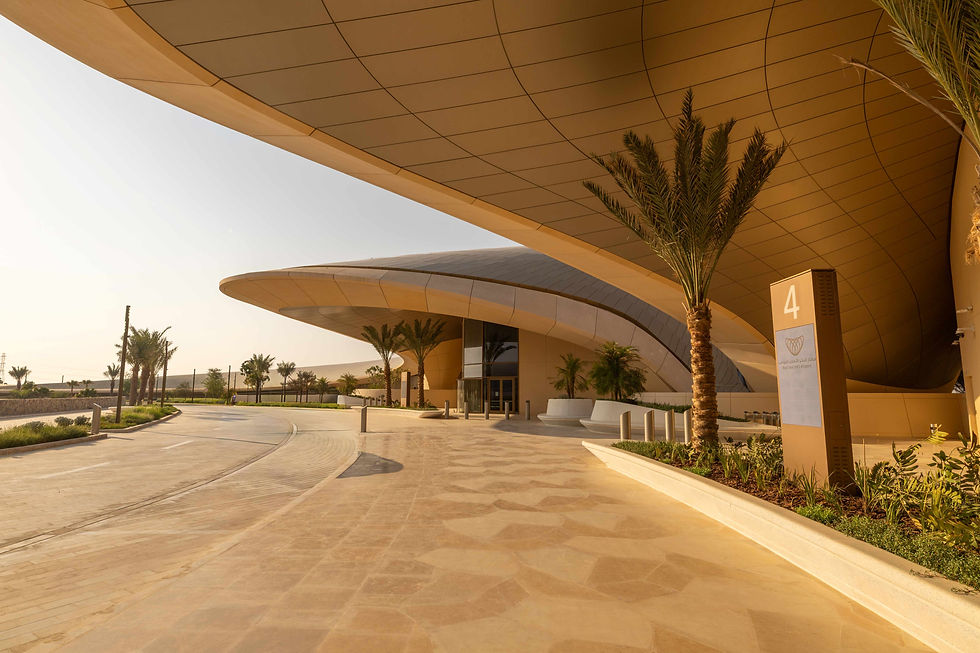
Red Sea International Airport (RSI), operated by daa International, has been awarded Level 1 accreditation under the Airport Carbon Accreditation programme – the only institutionally endorsed, global carbon management certification scheme for airports by Airport Council International.
Level 1 accreditation recognises airports that have defined their operational boundary and mapped their corresponding emission sources under Scope 12 and Scope 23 of the Greenhouse Gas Protocol, as well as compiled a latest annual carbon footprint report.
This achievement underscores RSI’s position as a pioneer in sustainable aviation infrastructure and marks the first step on its pathway towards reaching the highest level of accreditation (Level 5[1]) by 2027, in line with global climate goals.
RSI has been conceived from the ground up to set a new benchmark in airport sustainability. Built to LEED Platinum standards, the airport embeds environmental stewardship across design, construction and operations. Its modular pod-based terminal system allows capacity to scale with demand, ensuring that energy consumption remains tightly aligned to passenger flows. By maximising natural light and modular usage, this design approach significantly reduces the overall energy demand when compared with traditional centralised terminal structures.

RSI is also the first airport in Saudi Arabia to supply Sustainable Aviation Fuel (SAF) to aircraft, supporting the wider decarbonisation of the aviation sector. Complementing this, the airport is also rolling out all-electric ground service equipment.
To further safeguard the integrity of its surroundings, RSI’s growth is intentionally limited. RSG designed its destinations to accommodate no more than one million visitors a year at The Red Sea, and 500,000 visitors annually to AMAALA, ensuring development remains within environmental thresholds and natural carrying capacity. This measured approach reflects RSI’s role not just as a transport hub, but as a guardian of two of the world’s most pristine destinations.
[1] The uppermost level of Airport Carbon Accreditation is Level 5, which was launched in December 2023 and recognises airports in achieving and maintaining a 90% reduction in Scope 1 and 2 emissions compared to the airport’s selected baseline. In addition, airports at this level must collaborate with their entire ecosystem, including employees, suppliers, business partners, airlines, and other companies and third parties active on the airport site, to significantly contribute to emissions reduction, aligning with the broader Net Zero commitments of the sector.
2 Direct greenhouse gas (GHG) emissions from sources that are owned or controlled by the reporting organization.
3 Indirect GHG emissions from the generation of purchased energy that is consumed by the reporting organization.
Together, these measures position RSI as a global benchmark for sustainable airport operations, with Level 1accreditation confirming its rigorous commitment to measuring, managing and reducing carbon emissions on its journey to net zero on scope 1 and 2 emissions by 2027.


Comments